Species we protect
Species we protect
African Black Rhino
Rhinos were once found throughout Africa but as a result of human activities including poaching and hunting, populations across Africa have plummeted to the brink of extinction.
Today, rhino horn poaching is the main threat facing rhinos as demand has escalated in Asian countries, especially in Vietnam. Despite having no proven medicinal value and made of keratin, rhino horn has long been used in traditional medicines but in recent years, it has been incorrectly touted as a cure for ailments ranging from hangovers to treatment for cancer as well as status symbol.
Fun facts
A black rhino’s skin can be up to 5cm thick.
Black rhinos are smaller and lighter than their white rhino counterparts
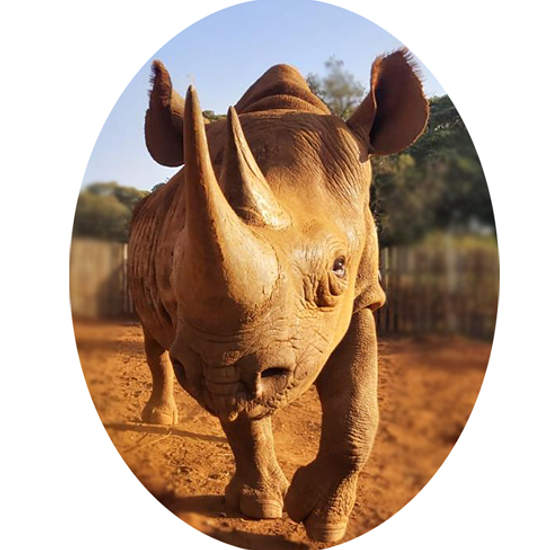
Black rhinos are browsers that use their hooked lip to pluck at bushes and branches for food.
Female black rhinos often have longer and thinner horns while males tend to have thicker horns.


Rhinos need our protection now more than ever
-
Poaching
1 rhino killed every nine hours
-
Population
24,706 - 26,570 Rhinos left in Africa
Knowing the Rhinos
Black rhinos have a reputation for being solitary animals and can be very territorial. Recent research has indicated they are more social than previously thought, however, particularly around water holes at night.
Appearance:
Whilst they may be black and white in name, African rhinos are actually grey. Rhinos can be easily distinguished by the shape of their lips: A black rhino has a hooked lip whilst a white rhino will have a square lip. Black rhinos also have less of a pronounced hump on the back of their necks.
Horns:
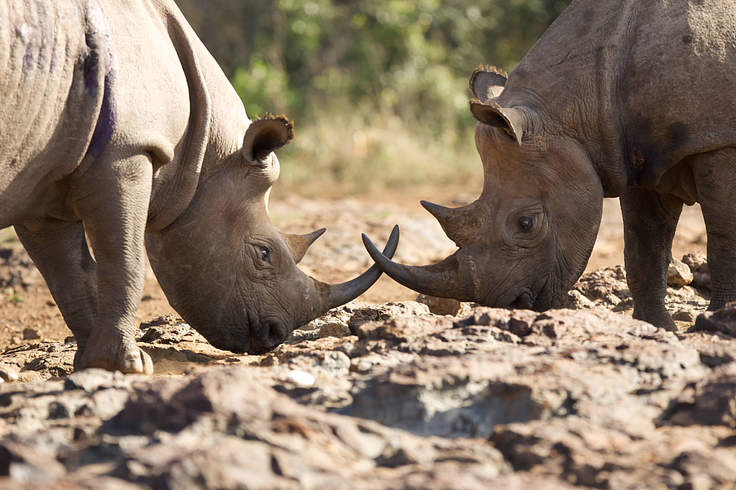
Horns are used by rhinos as weapons during confrontations and for protection. They may also be used during encounters with other rhinos to demonstrate dominance or make a threat display. Whilst rhino calves are both without horns, a stub will appear from the age of one-two months and will continue to grow into a distinctive horn shape throughout a rhino’s lifetime.
The gestation period for a rhino is 15-17 months and at birth, calves can weigh around 30-45kg. Calves will suckle for up to one year and will remain with their mothers for 2-4 years or until a female is ready to calve again.
Rhinos are vital to keeping ecosystems in balance which means by protecting Africa’s rhinos, we protect other species too. As mega-herbivores, white rhinos have been described as ‘selective lawnmowers’ and help maintain grasslands, selectively grazing on certain grass species promoting biodiversity. Black rhinos also eat many woody plants which results in more grasses growing for the benefit of other animals.
Find out how the Sheldrick Wildlife Trust is helping Kenya’s rhinos
Anti-Poaching
Ground teams, accompanied by a canine unit, protect wildlife from illegal activities.
See ProjectMobile Veterinary Units
Six teams and one Sky Vet Unit treat tens of rhino cases each year.
See ProjectAerial Surveillance
Aircraft and helicopters monitor wildlife and identify illegal activity
See Project